
When you enter a room in traditional finery, heritage seems to rest against your skin. Choosing kundan vs polki jewellery for a wedding or festive celebration becomes an emotional journey into your style.
You may feel torn between two iconic choices. One brings bright color to your outfit, while the other shows the raw sparkle of uncut diamonds.
Knowing the details of kundan vs polki jewellery helps you choose a style that feels true to you. Kundan is known for intricate, glass-based artistry, while polki uses uncut diamonds for antique-inspired, timeless elegance.
This guide explores the craftsmanship, quality, and price points of both stunning jewellery styles. By the end, you can confidently select pieces that complement your outfit and reflect your spirit.
Key Takeaways
- Kundan-style pieces are known for their vibrant, colorful glass work.
- Polki-style accessories feature uncut diamonds for a natural, organic glow.
- Consider your outfit’s color palette when choosing between these two styles.
- Authenticity and craftsmanship significantly impact the long-term value of your investment.
- Durability varies, making it important to match your choice with the occasion.
What Kundan vs Polki Jewellery Means for Your Style
You may wonder about the specific difference between kundan and polki jewellery when shopping for bridal or festive sets. Both styles reflect Indian heritage, but each gives the wearer a different look. Knowing these details helps you choose a style that suits your taste.
Why These Two Traditional Styles Are Often Confused
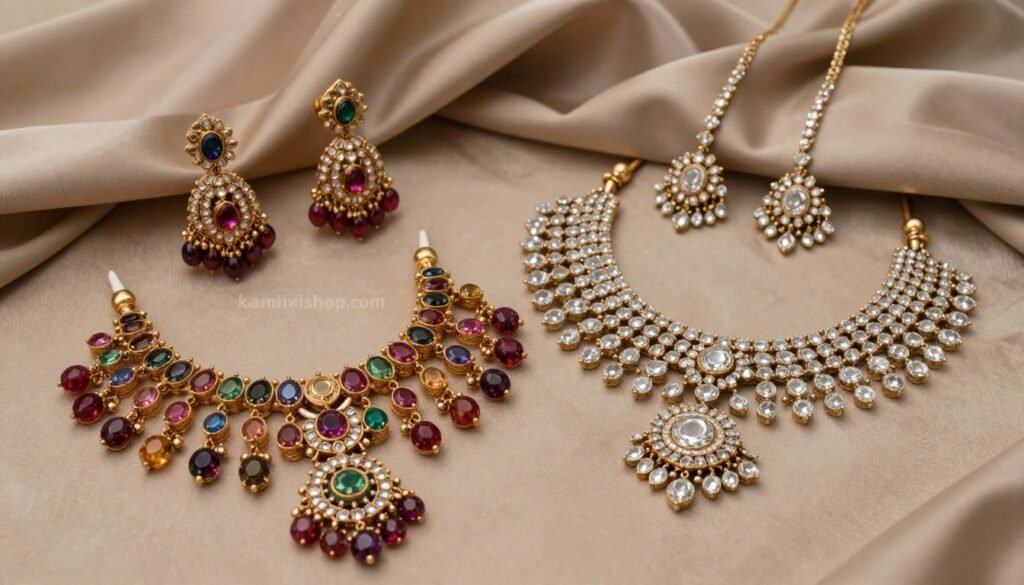
People often confuse these styles because both have a rich, regal look. Both may show ornate gold-toned settings and handmade borders shaped by Indian artistry. Since weddings and grand celebrations often feature both, their looks may seem alike at first glance.
Both styles use a meticulous setting technique that places stones inside a gold frame. This shared craft can hide differences in the materials. Without knowing the parts, their gold-heavy looks may cause confusion.
The Main Difference Between Kundan and Polki Jewellery
The main difference between kundan and polki jewellery lies in the stones themselves. Kundan jewellery usually uses glass stones or colored gems in gold foil, creating a bright, even look. Polki jewellery uses uncut, raw diamonds that keep their natural shape and sparkle.
The setting changes slightly to suit each material. Kundan places glass stones in a gold frame, while Polki uses a complex method for fragile, uncut diamonds. These technical differences give each style a unique visual character.
How Your Outfit, Occasion, and Personal Taste Affect the Choice
Your choice of kundan vs polki jewellery should depend on the vibe you want. If you prefer a colorful, dramatic look with heavy embroidery, Kundan is often ideal. Its many colored stones make it very flexible for festive outfits.
Choose Polki for a timeless, luxurious look with a natural diamond glow. It offers heirloom quality and suits sophisticated, minimalist, or traditional bridal wear. Use the table below to decide which style fits your needs:
| Feature | Kundan Jewellery | Polki Jewellery |
|---|---|---|
| Primary Stone | Glass or Colored Gems | Uncut Diamonds |
| Visual Appeal | Vibrant and Uniform | Organic and Sparkling |
| Best For | Festive & Colorful Outfits | Luxury & Heirloom Looks |
| Price Range | Generally More Affordable | Higher Investment |
Historical Roots of Kundan-Style and Polki-Style Jewellery
Indian jewelry grew through centuries of art and support from royal courts. This past matters in any kundan jewellery guide, because it shows the skill behind your favorite pieces. These styles are not only accessories; they are living artifacts of a rich cultural past.
Royal Rajasthani and Mughal Influences on Kundan Jewellery
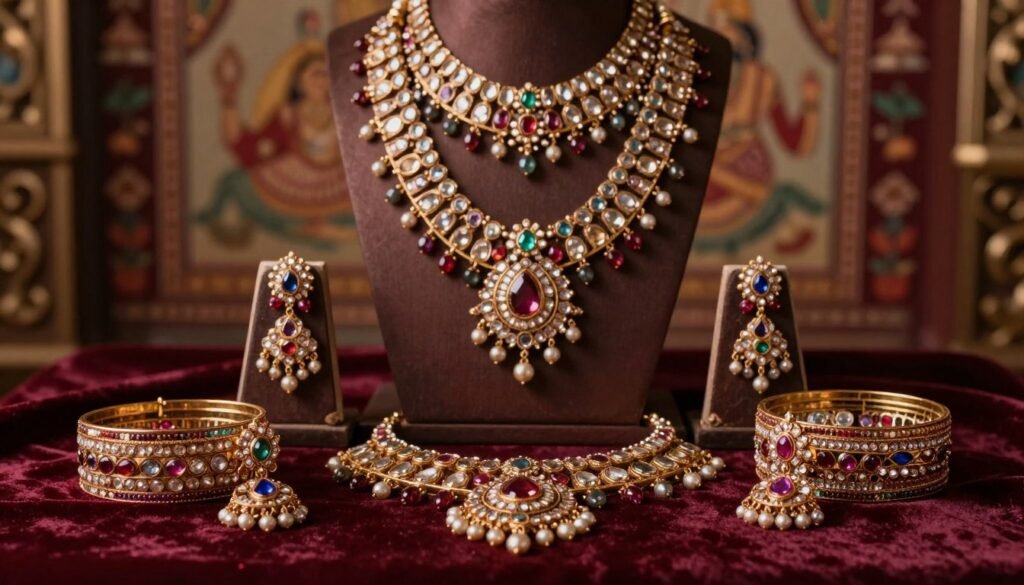
Kundan jewelry began in the royal courts of Rajasthan and the Mughal Empire. Artisans set glass or gemstones into a gold foil base. This method created detailed designs for royalty during grand celebrations.
The Mughal influence added refined floral motifs and balanced patterns. Rajasthani craftsmen added vibrant colors and bold shapes. Together, these styles formed the look still seen in traditional Indian bridal wear.
Polki Jewellery and Its Connection to Uncut Diamonds
Polki jewelry uses uncut, unpolished diamonds in their natural state. Unlike modern brilliant-cut diamonds, these stones keep their raw beauty. Their link to nature gives Polki an old-world charm that collectors highly value.
These diamonds receive little processing, so each stone has a unique shape and clarity. No two Polki jewelry pieces look exactly alike. This heritage-inspired appearance makes Polki a lasting investment for your collection.
How Contemporary Indian Jewellery Interprets Both Traditions
Modern designers bring these old crafts into current fashion. Contemporary pieces often feature:
- Lighter constructions that make heavy-looking sets comfortable for long events.
- Mixed materials, such as combining traditional gold foil with modern metallic alloys.
- Updated silhouettes that pair perfectly with both ethnic sarees and fusion outfits.
By adapting these styles, designers keep the artistry of the past relevant for today’s celebrations. You may prefer Kundan’s vibrant drama or Polki’s raw luxury, but both traditions keep evolving. This kundan jewellery guide shows how jewelry connects history with your personal style.
Craftsmanship Behind Kundan and Polki Jewellery
Understanding the intricate artistry behind traditional Indian jewellery shows why these pieces remain timeless treasures. Skilled artisans pass down these techniques through generations. Studying these methods builds deeper appreciation for the Kundan craftsmanship and Polki craftsmanship defining these styles.
How Kundan-Style Jewellery Is Made
Setting Coloured Glass or Gemstones in a Gold Foil Base
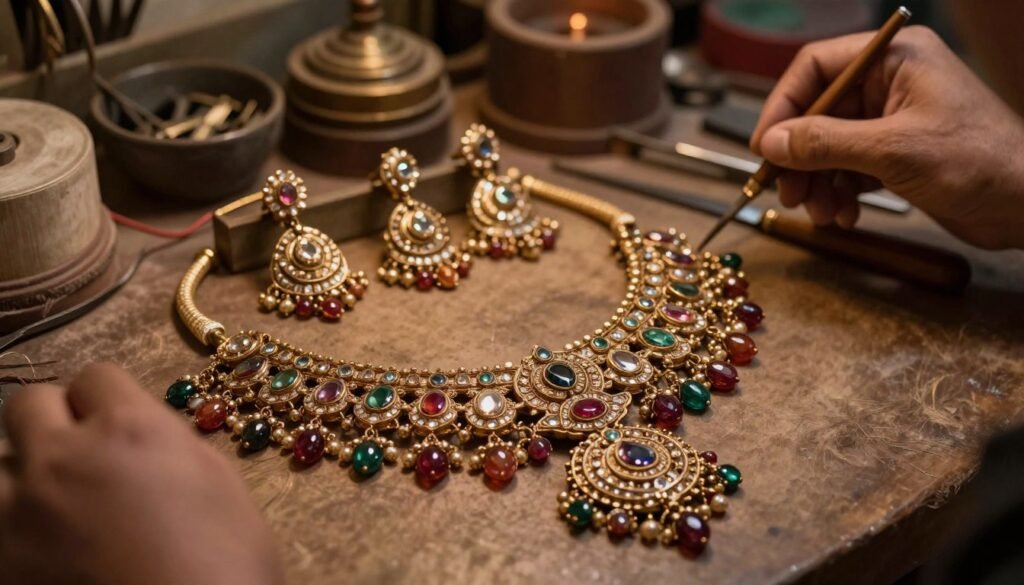
The process begins by creating a gold skeleton. Artisans place highly refined gold foil between the stone and metal frame as a binding agent. This method securely sets glass or semi-precious stones, creating a vibrant, polished look.
Using Meenakari Enamel Work on the Reverse Side
A hallmark of authentic Meenakari jewellery is the fine enamel work on its back. Artisans paint floral or geometric patterns with mineral oxides. This hidden detail adds luxury and makes the jewellery beautiful from every angle.
How Polki-Style Jewellery Is Made
Setting Uncut Diamonds in Gold or Gold-Plated Foil
Unlike other styles, uncut diamond jewellery celebrates the stone’s raw beauty. Craftsmen set these diamonds in gold or gold-plated foil, which reflects light through each stone. This traditional method shows the diamond’s natural brilliance without modern cutting techniques.
Preserving the Natural Shape and Uneven Facets of Polki Stones
This style charms people with its stones’ organic, uneven shapes. Since the diamonds keep their natural forms, each piece has a unique, rustic character. Uneven facets give the jewellery an authentic, vintage appeal.
Why Craftsmanship Influences Appearance, Weight, and Value
Quality handwork shapes the final look and lasting value of your investment. Strong construction keeps stones secure and balances weight for comfortable wear. Consider these factors when judging your next piece:
- Surface Finish: Smooth edges and precise enamel work indicate superior skill.
- Structural Security: Proper foil placement prevents stones from loosening over time.
- Visual Depth: Expert setting techniques enhance the natural light reflection of the stones.
| Feature | Kundan Style | Polki Style |
|---|---|---|
| Primary Material | Glass/Gemstones | Uncut Diamonds |
| Back Finish | Meenakari Enamel | Gold/Foil Backing |
| Stone Shape | Uniform/Cut | Natural/Uneven |
Ultimately, the dedication of each artisan turns raw materials into wearable art. Whether you prefer colorful Kundan or raw, elegant Polki, craftsmanship shapes your collection’s value.
Kundan vs Polki jewellery: How the Looks Compare
A polki jewellery comparison shows why Kundan and Polki remain timeless favorites in Indian bridal jewellery. Both share rich heritage, but each creates a distinct look.
The Bright, Even Glow of Kundan-Style Jewellery
Colourful Stones, Detailed Borders, and Reflective Gold Foil
The Kundan visual style uses glass stones or semi-precious gems set in pure gold foil. This method makes the surface highly reflective, creating a bright, even glow.
You often see detailed borders and bright colors that help these ornaments stand out. Gold foil works like a mirror, making the stones shine and catch light from every angle.
Why Kundan Works Well With Vibrant Silk and Embroidered Outfits
Kundan’s bold look suits heavy, colorful fabrics. It matches rich silk sarees and detailed traditional embroidery without disappearing into the design.
“The beauty of Kundan lies in its ability to command attention while harmonizing with the most vibrant festive colors.”
The Organic Sparkle of Polki-Style Jewellery
Soft Diamond Fire, Irregular Shapes, and Antique Gold Tones
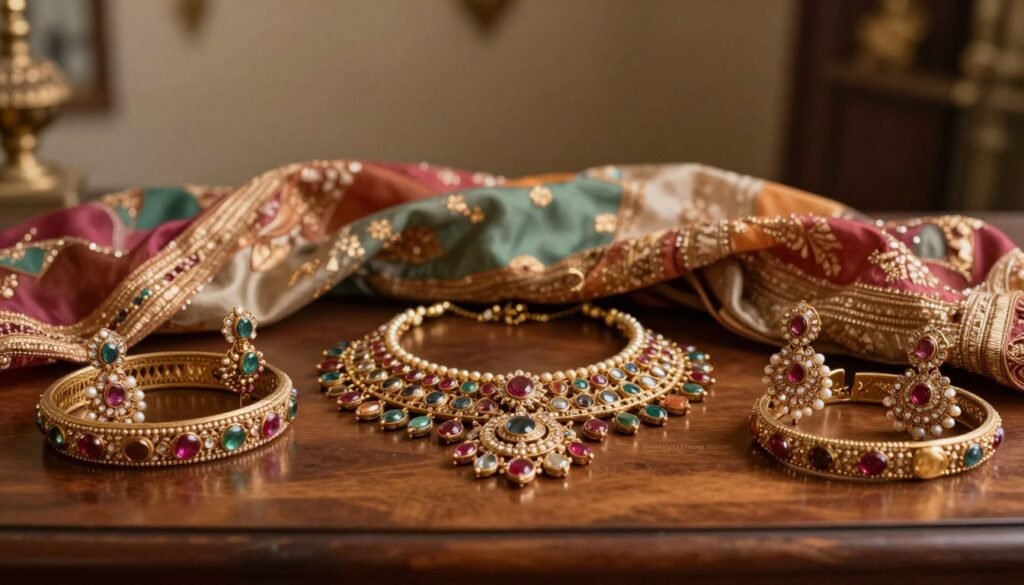
In contrast, the Polki visual style uses natural, uncut diamonds. These stones keep their raw, organic, irregular shapes and create a softer, muted sparkle than polished gems.
Antique gold settings often have a matte or brushed finish. They create a sophisticated heirloom look that feels grounded and luxurious.
Why Polki Complements Pastel, Neutral, and Heavily Embellished Outfits
Polki jewelry suits modern bridal trends and many outfit styles. Its understated elegance pairs with pastel lehengas or neutral-toned outfits, letting the diamond fire shine without overwhelming your look.
With heavily embellished clothing, Polki’s subtle shimmer creates a balanced, refined finish. It adds a touch of royalty that feels effortless and timeless.
Quick Comparison of Kundan and Polki Visual Characteristics
This polki jewellery comparison helps you choose by showing the main differences between these styles.
| Feature | Kundan Style | Polki Style |
|---|---|---|
| Stone Type | Glass or Semi-precious | Uncut Diamonds |
| Visual Glow | Bright and Even | Soft and Organic |
| Best Outfit Match | Vibrant Silk/Embroidery | Pastels/Neutral Tones |
- Kundan: Best for high-contrast, colorful festive wear.
- Polki: Best for sophisticated, luxury, and heirloom-inspired looks.
Kundan vs Polki Jewelry Quality and Durability
When you invest in traditional Indian ornaments, build quality matters as much as beauty. The overall kundan vs polki jewelry quality depends on the base metal, setting precision, and steady craftsmanship. Do not judge a piece by sparkle alone, because its inner build shapes its lasting strength.
What Determines Kundan Jewellery Quality
Checking the Base Metal, Foil Setting, Stone Security, and Meenakari Finish
Quality Kundan pieces use solid base metal, usually silver or a high-grade alloy, dipped in gold. The foil setting reflects light behind glass stones and makes them shine. Check each stone to ensure the gold casing holds it firmly, without any wobble.
Also, look for a clean Meenakari finish on the jewelry’s reverse side. Smooth, bright enamel shows careful work and strong attention to detail. Chipped or uneven enamel may point to rushed work and reduce the piece’s life.
What Determines Polki Jewellery Quality
Checking Diamond Clarity, Cut, Foil Coverage, and Gold Purity
Polki jewelry uses uncut diamonds, so jewellery durability depends on stone quality. Check diamond clarity, and ensure the cut keeps the gem’s natural, raw beauty. Foil coverage behind the diamonds must stay even for Polki’s deep, signature glow.
Gold purity also matters, since these pieces often use 22k or 24k gold for diamond weight. Higher purity keeps the setting soft enough to hold stones securely for many years. Always check the hallmark to confirm the gold’s composition and value.
Which Style Handles Frequent Wear Better
Protecting Kundan from Moisture, Impact, and Tarnishing
Good Kundan jewellery care matters because glass stones and foil settings react to the environment. Keep these pieces away from moisture, which can reach the stones and tarnish the foil. Also avoid hard impacts, since glass stones can crack when dropped on hard surfaces.
Protecting Polki from Scratches, Loose Settings, and Chemical Exposure
Though diamonds are hard, Polki jewellery care requires care around chemicals. Perfumes, hairsprays, and lotions can coat uncut diamonds and dull their natural shine. Check the settings often for loose diamonds, since their natural shapes may shift in gold frames.
Kundan vs Polki Jewelry Price Difference
When buying traditional Indian ornaments, you may ask why similar pieces have very different prices. Knowing the kundan vs polki jewelry price difference helps you choose an investment that fits your budget and needs.
Why Kundan-Style Jewellery Is Usually More Affordable
Kundan-style pieces attract buyers with bright designs and affordable prices. They offer a royal look at a lower cost, meeting many fashion needs.
The Effect of Glass Stones, Imitation Gems, Gold Content, and Labour
The Kundan jewellery price is often lower because these pieces use glass stones or synthetic gems, not precious stones. The base may use silver with gold plating or lower-karat gold, which cuts raw material costs. Because assembly is simpler than diamond setting, the jewellery making charges are also lower.
Why Polki-Style Jewellery Often Costs More
Polki jewelry is a high-end investment piece. It costs more because its natural materials can keep their value over time.
The Effect of Uncut Diamonds, Gold Purity, Craftsmanship, and Carat Weight
The Polki jewellery price reflects genuine, uncut diamonds mined from the earth. These stones sit in high-purity gold, often 22k, adding to the piece’s weight and cost. Securing the diamonds takes skilled, time-consuming work, so the jewellery making charges stay high.
“True luxury is not just in the shine, but in the permanence of the materials that define your legacy.”
How to Compare Prices Without Judging Only by Appearance
Bright sparkle can mislead shoppers, so look deeper to judge a piece’s true value. Review technical details instead of visual appeal alone.
Reviewing Hallmarks, Stone Details, Making Charges, and Certification
To compare the kundan vs polki jewelry price difference, check official gold hallmarks. Ask for stone-quality documents, and ensure the Kundan jewellery price or Polki jewellery price appears clearly on your invoice. Also request certification that confirms the diamonds’ authenticity.
| Feature | Kundan Style | Polki Style |
|---|---|---|
| Primary Stone | Glass/Imitation | Uncut Diamond |
| Gold Purity | Variable/Plated | High (22k) |
| Investment Value | Low | High |
Kundan vs Polki Jewelry Authenticity: What to Verify
When you shop for traditional Indian jewelry, check each piece’s quality for lasting satisfaction. Understanding kundan vs polki jewelry authenticity helps separate skilled work from mass-produced alternatives. Check construction details to protect your investment’s beauty and value.
How to Check Whether Kundan-Style Jewellery Is Well Made
Kundan jewelry uses glass stones or gems placed carefully into gold foil settings. Because this work takes time, the finished piece should feel solid and look even.
Looking for Even Settings, Secure Foil Work, Hallmarks, and Clear Product Details
Inspect the back to ensure the lac or wax does not show or leak from the edges. The stones should sit evenly, while the gold foil should look smooth and secure. Always look for a gold purity hallmark, such as 22K or 18K, stamped on the metal.
The hallmark confirms the base material’s quality. Request an invoice listing the gold weight and the types of stones used.
How to Check Whether Polki-Style Jewellery Is Genuine
Polki jewelry features natural, uncut diamonds, making it a major financial commitment. Checking jewellery authenticity is vital when buying these precious stones.
Confirming Uncut Diamond Use, Gold Purity, and Independent Certification
Genuine Polki should have a natural, organic sparkle, not the even shine of machine-cut diamonds. Insist on an uncut diamond certification from a reputable laboratory to verify stone quality and origin. Check that the gold purity matches the price, since quality Polki usually uses 22K gold.
Questions to Ask an Indian Jeweller Before You Buy
Before you buy, discuss the piece’s origin and care with your jeweler. Clear communication helps prevent confusion about your jewelry’s value.
Clarifying Natural Stones, Diamond Treatment, Return Policies, and Repairs
Ask whether the stones are natural or treated to improve their appearance. Ask about the store’s repair policy, since traditional settings may need special care. Confirm whether the store offers a buy-back or exchange policy, showing it is trustworthy.
| Feature | Kundan Verification | Polki Verification |
|---|---|---|
| Primary Material | Glass or Semi-precious | Uncut Natural Diamonds |
| Certification | Gold Purity Hallmark | Diamond Lab Certificate |
| Construction | Check Foil and Wax | Check Stone Clarity |
| Maintenance | Professional Cleaning | Specialized Repair |
Choosing Kundan or Polki for Your Wedding and Festive Outfits
To decide kundan vs polki jewelry which is better, consider how each piece suits your outfit and event. Your Indian wedding jewellery adds the final touch to your bridal vision.
When Kundan Is the Better Choice for You
Kundan uses bright colored stones and glass, so it suits many festive occasions. It pairs well with many fabrics and remains common in bridal trousseaus.
Bridal Lehengas, Bright Sarees, Haldi Celebrations, and Statement Layering
If you want Kundan bridal jewellery that stands out against bright colors, choose this style. It works well in these settings:
- Haldi Ceremonies: The bright, opaque stones complement yellow and marigold themes perfectly.
- Statement Layering: Because Kundan is often more affordable, you can easily layer multiple necklaces for a regal, heavy look.
- Bright Sarees: The intricate gold foil work adds a festive glow to silk or chiffon sarees.
When Polki Is the Better Choice for You
Polki jewelry offers a natural, raw sparkle that feels luxurious and timeless. It suits people who want jewelry as a long-term investment.
Bridal Portraits, Reception Wear, Heirloom Pieces, and Formal Evening Events
Choosing Polki bridal jewellery keeps your look refined under professional lighting. Consider it for these occasions:
“True elegance in jewelry is not about being noticed, but about being remembered.” — Anonymous
- Bridal Portraits: The uncut diamonds catch light beautifully, ensuring your close-up shots look radiant.
- Reception Wear: Its subtle, sophisticated shimmer pairs perfectly with evening gowns or heavy velvet lehengas.
- Heirloom Pieces: These items often retain value, making them perfect for passing down through generations.
Matching Jewellery to Your Neckline, Embroidery, and Colour Palette
A balanced look depends on how your jewelry works with your clothing. Accessories should enhance your outfit, not compete for attention.
Balancing Heavy Necklaces With Maang Tikkas, Earrings, and Bangles
If your lehenga features heavy zardosi embroidery, choose a lighter necklace to prevent a cluttered look. Conversely, if your neckline is simple, a heavy statement necklace becomes your ensemble’s focal point.
Keep your Maang Tikka and earrings in a style that matches your necklace. With a massive choker, choose slightly smaller earrings to keep good proportions.
Choosing Between a Traditional, Modern, or Antique-Inspired Finish
Your personal style should guide your jewelry finish. Traditional finishes often use heavy gold work and detailed motifs, which suit classic ceremonies.
Modern interpretations use sleek, simple designs that suit contemporary weddings. For an antique-inspired look, choose oxidized gold or matte finishes for a vintage, royal feel.
How to Decide Which Style Suits You Best
Choosing between these iconic Indian jewellery styles depends on how you plan to wear them. Both are beautiful, but your lifestyle and events should guide your choice. Knowing kundan vs polki jewellery helps you decide kundan vs polki jewelry which is better for your collection.
Choose Kundan for Colour, Drama, and Flexible Occasion Wear
Kundan suits people who love vibrant colors and bold, dramatic looks. Glass stones or colored gems create a kaleidoscope of hues for many outfits. It works well for festive gatherings when you want attention without a diamond-like intensity.
Choose Polki for Diamond Character, Luxury, and Heirloom Appeal
If you value lasting luxury and heirloom quality, Polki may suit you best. Uncut diamonds create an organic sparkle that grows more beautiful with time. Many people see Polki as a long-term financial decision because these pieces can retain significant value and prestige for generations.
Compare Kundan vs Polki Jewelry Quality, Price, and Maintenance
When comparing kundan vs polki jewelry quality, study the setting materials. Kundan uses gold foil and wax, while Polki uses detailed metalwork to hold diamonds. Also consider the kundan vs polki jewelry price difference, since natural diamonds give Polki a higher market value.
| Feature | Kundan | Polki |
|---|---|---|
| Primary Material | Glass/Colored Stones | Uncut Diamonds |
| Price Point | Accessible | Premium |
| Maintenance | Moderate | High Care |
Use This Decision Checklist Before Purchasing
Before buying, use this wedding jewellery buying checklist to make a wise choice. This simple plan helps you compare each option.
Set Your Budget and Decide How Often You Will Wear the Piece
Set your spending limit early. For daily or frequent festive wear, Kundan offers good value. For a bridal trousseau, Polki is a classic investment.
Identify Whether You Prefer Uniform Shine or Natural Stone Variation
Kundan provides a consistent, bright glow across the piece. Polki offers a raw, natural sparkle that varies from stone to stone. This gives it an authentic, antique character.
Check Comfort, Weight, Skin Sensitivity, and Storage Requirements
Try on the jewelry and check its weight on your neck or ears. Make sure the metal backing feels smooth, so it does not irritate your skin. Both styles need cool, dry storage to keep their luster.
Match the Jewellery to Your Existing Wardrobe and Wedding Plans
Consider the colors and embroidery of your current outfits. A versatile Kundan set may suit several sarees, while a statement Polki necklace can anchor a grand wedding ensemble. Following this wedding jewellery buying checklist helps your investment bring joy for years.
Conclusion
Choosing traditional Indian jewellery can transform your whole look for a special event. Kundan-style jewellery brings bright colors and reflective foil that pair well with festive outfits. This versatile accessory gives your outfit a bright, polished glow.
Polki-style jewellery has special character because it uses uncut diamonds. These pieces offer natural sparkle and antique charm, making a stunning heirloom. Your choice often depends on the look you want during a celebration.
A smart Kundan vs Polki decision means weighing several important factors. Consider your budget, the care you can provide, and material authenticity. Think about outfits you plan to wear, so your jewellery matches your style.
Your wedding jewellery choice is a deeply personal journey. Choose pieces that reflect your taste and comfort. Whether you prefer colorful Kundan brilliance or raw Polki luxury, choose items that build confidence. Share your favorite style preferences with your jeweler to find the perfect match for your collection.